August’s Suicidal Thoughts
Women TalkingAugust Epp’s suicidal thoughts are not a passing abstraction: shortly before the women’s departure, he has a gun with him and intends to kill himself. His course changes when Ona Friesen recognizes his distress and asks him to help the women. The novel sets his private crisis against the immediate demands of collective action, making his return to usefulness concrete without presenting it as a simple or complete cure.
Identity and circumstances
August is a schoolteacher and a failed farmer, a man whose place in the community is complicated by his family history and by his connection to the women’s meeting. He identifies Peters, the younger, as his father, distinguishing him from the man who raised him and then disappeared. When August later considers his own life, he measures it against work he can still do: teaching basic reading, writing, and arithmetic, organizing games of Flying Dutchmen, and keeping the women’s meeting minutes.
The crisis around the meeting gives that work urgency. The colony’s men have gone to the city to post bail for the imprisoned attackers, hoping they can return to Molotschna while awaiting trial. Peters says the women will then be expected to forgive the men; if they refuse, they will have to leave a world they know for an outside one about which they know little. With only two days to organize a response, the women face a decision with immediate consequences. August is not the decision-maker, but he becomes one of the people whose practical skills can help the women act.
The gun and Ona’s intervention
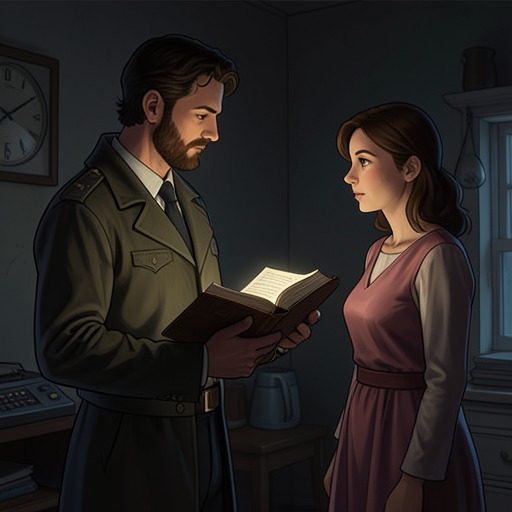
Two days before the departure, August encounters Ona on the dirt path between her house and the shed where he sleeps. He has been crying and wandering in the fields, and that day he has resolved to shoot himself. The gun is in his hand when he sees her. He considers running away or throwing it into the cornfield, but instead freezes and watches her approach. The account describes no completed attempt; it shows a plan and a moment in which August remains at risk.
Ona begins to speak, stops, and sees that August is crying. She takes his hand and leads him a first step out of the shadow and toward the sunlight. Then she places his hand on her pregnant belly. She tells him that she has prayed for him to find God’s grace and regards him as a physical reminder of goodness, hope, and life after violence. Her reference is to August’s mother and father, including Peters, the younger. The gesture connects August’s family history to Ona’s pregnancy and to a future that has not been erased by the violence in the colony. It does not establish that his despair disappears; it gives him a reason to understand that his presence matters to someone else.
Work as a reason to remain alive
Ona asks August to take the minutes for the women’s meetings. He hesitates, but recognizes that refusing on the grounds that he expects to be dead would expose the plan he has not said aloud. In retrospect, he understands that he had already communicated his intention through his eyes, his silence, and especially the gun. The exchange makes his condition legible without turning it into a speech: Ona reads what he cannot bring himself to tell her directly.
August’s own explanation for continuing is deliberately practical. He knows that he is of more use alive, teaching, organizing games, and recording the women’s discussions, than dead in a field. The minutes matter because the women are making a decision under pressure, and the work of recording their meetings gives his literacy and attention a purpose beyond his own survival. His response is not framed as a sudden recovery or as certainty about what comes next. He chooses, for now, the duties that others need him to perform.
The departure and changed purpose
August’s role becomes more tangible as preparations advance. He wraps the map around a large block of cheese, covers it with ordinary brown paper, and places the safe in the back of Greta Loewen’s buggy, beneath the rear seat. He also packs onions, soap, and pieces of wood that can provide traction if the wheels become mired in mud or serve as kindling. These provisions show him converting the women’s plan into practical preparations, while Ona appears pleased with what he has done.
The departure also means that not every child can join the women. Greta asks whether Cornelius is ready and whether his wheelchair has been packed away; Melvin tells her that Cornelius will remain because his mother is in the Do Nothing group and he has no choice but to stay with her. Against this divided outcome, August’s final contribution is immediate and specific. He had planned to leave after the women and then kill himself. Instead, he watches over the Koop brothers, making sure they remain unconscious long enough for the women to get sufficient distance.
Significance
August’s suicidal thoughts mark a crisis in which the future has narrowed to a gun, silence, and an intended death. Ona’s response opens that future by recognizing his distress and asking for his participation, while the women’s preparations give his participation concrete form. The movement from carrying a gun on the path to guarding the Koop brothers during the departure is not a neat transformation from despair to happiness. It is a change in what he does with the time he has: he records, teaches, prepares supplies, and helps the women gain ground. His survival remains uncertain beyond the actions described, but in the decisive moment he is no longer waiting for the women to leave so that he can die; he is helping them leave safely.